
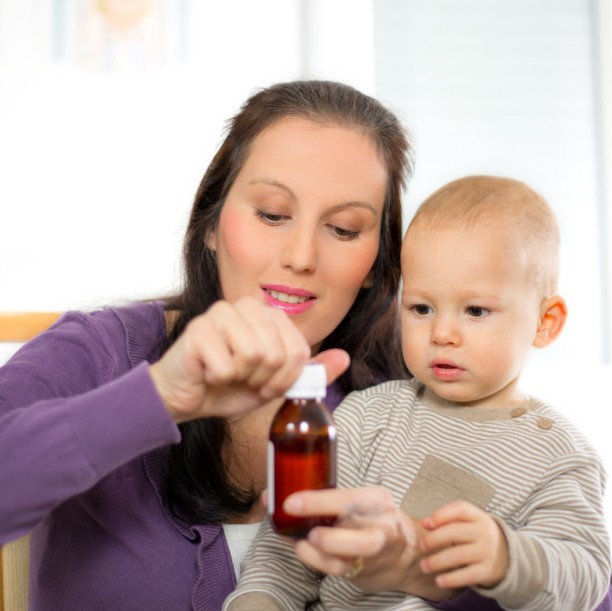
What does the research tell us about their effectiveness and safety, and what should you consider before giving them to your child?
Wouldn’t it be wonderful if there were a magic button you could press at bedtime and your baby would simply drift off to sleep? No more rocking, putting them down, picking them up and starting all over again. You might finally have a little time for yourself, your partner, or just a quiet moment on the sofa without wondering when your baby will wake again.
If bedtimes have been difficult for weeks or months, I completely understand why you might be looking for something that could help. Perhaps there’s something you haven’t tried yet. A few drops of melatonin, a magnesium supplement or a herbal syrup that promises calmer evenings. And when you come across products marketed specifically for children’s sleep, perhaps in a pharmacy or online, it’s only natural to wonder whether they might be worth trying.
That’s why I wanted to take a closer look at what we actually know about these supplements. Not to discourage you from looking for solutions, or to give you one more thing to worry about. Quite the opposite. I want you to have reliable information about what might help, what the potential risks are, and where the scientific evidence is still lacking. Because sleep has become big business. There are countless products and services promising easier bedtimes and more restful nights. And when you’re exhausted, a simple solution can sound incredibly appealing. But just because something is available to buy doesn’t necessarily mean it works, or that it’s suitable for your baby.
This article has been professionally reviewed by Ildikó Fekete, a pharmacist and lactation consultant.
Would you give your baby something to help them sleep?
I recently asked this question in my Hungarian Facebook community, Alvás, altatás (Sleep and Settling). The group has been running for over ten years and now has more than 64,000 members. It’s a community where parents share their experiences, ask questions and look for support with their babies’ and young children’s sleep.
By 30 October 2026, more than 200 parents had responded to my poll about using sleep supplements. 8% had tried a sleep supplement for their child, 20% had considered it but decided against it, 19% had looked for other solutions, and 53% had never even considered using one.
Of course, this isn’t a scientific survey or a representative sample of parents. But it offers an interesting glimpse into the questions families are asking and the options they’re considering.
I’ve been supporting families with babies and young children for nearly 20 years, and I know how exhausting bedtime can become. Sometimes it’s not even the night waking that’s the hardest part. It’s the hour or more you spend trying to help your baby fall asleep in the first place. Perhaps you’ve started dreading bedtime because you never know how long it will take. You love holding your baby, feeding them, rocking them and being close to them, but you also need some rest yourself. You shouldn’t have to choose between meeting your baby’s needs and looking after your own. Both matter.
So let’s look at what these sleep supplements can actually offer, and what the research tells us.
Melatonin: Does it really help children fall asleep?
You may already be familiar with melatonin. Perhaps you’ve taken it yourself when travelling across time zones, or you know someone who says it helped them sleep. Melatonin is a hormone naturally produced by our bodies. It plays an important role in regulating our circadian rhythm, or internal body clock. Melatonin levels generally rise after dark, helping to signal that biological night has begun. Melatonin taken as a supplement is also biologically active. It has real physiological effects. And in certain circumstances, it can be helpful.
There is evidence supporting melatonin use for some sleep disorders, particularly when the timing of sleep or the circadian rhythm is disrupted. It may also be prescribed as part of treatment for some children with neurodevelopmental conditions. But does that mean it will help if your baby takes a long time to fall asleep or wakes frequently during the night?
What do we know about melatonin use in very young children?
A systematic review published in January 2026 examined 19 studies of melatonin use in children aged six years and under. The clinical trials included a total of 167 young children with neurodevelopmental conditions.
Some studies reported short-term improvements in falling asleep. However, the researchers found insufficient evidence from clinical trials to establish its effectiveness in typically developing young children.
There is also limited evidence about long-term safety.
European expert guidance published in 2024 recommends avoiding melatonin in children under two years of age. For older children with persistent sleep-onset difficulties, melatonin may be considered in specific circumstances, under medical supervision and after non-pharmacological approaches have been explored. This distinction really matters. If your ten-month-old baby falls asleep while breastfeeding, needs rocking to settle, or wakes several times during the night, that doesn’t mean they have a melatonin deficiency. And it doesn’t necessarily mean there’s anything wrong with their sleep.
Melatonin is not a conventional sedative, and it isn’t a magic solution for the normal night waking and need for closeness that are so common in infancy.
What about magnesium and natural sleep remedies?
Perhaps melatonin feels like too much, but you’re more comfortable with the idea of magnesium or a herbal supplement. After all, these are often described as natural ingredients, and some products are marketed specifically for children. But natural doesn’t automatically mean effective or risk-free.
Magnesium
Magnesium is essential for normal nerve and muscle function. However, the fact that our bodies need magnesium doesn’t mean that giving a child extra magnesium will help them fall asleep. Most research on magnesium and sleep has involved adults, and even there, the findings are mixed.
In babies and young children, there is insufficient clinical evidence that magnesium supplementation reduces the time it takes to fall asleep or decreases night waking. Of course, if a child has a diagnosed magnesium deficiency, supplementation may be necessary. But that’s something to discuss with a healthcare professional.
L-tryptophan
L-tryptophan is an essential amino acid that the body can use to produce serotonin and, through several biochemical steps, melatonin. That sounds promising, doesn’t it? But it doesn’t mean that giving your child extra tryptophan will automatically increase melatonin production or improve their sleep. There isn’t sufficient clinical evidence to support its use as a sleep aid in young children.
Lemon balm, chamomile, passionflower and other herbs
These plants have a long history of traditional use for relaxation and sleep. Perhaps you enjoy a cup of lemon balm or chamomile tea in the evening and find it soothing. But we can’t assume that something which seems helpful for adults will have the same effects, or be equally safe, for babies and young children.
Research on herbal sleep remedies in children is limited, particularly when several herbal extracts are combined in one product. We know even less about the safety of regular, long-term use. So while these ingredients may sound gentle and reassuring, their natural origin doesn’t establish their effectiveness or safety for young children.
If you can buy it without a prescription, does that mean it’s safe?
You might reasonably assume that if something is sold in a pharmacy, or marketed specifically for children, it must have been thoroughly tested. But there’s an important distinction between medicines and food supplements.
I asked Ildikó Fekete, a pharmacist and lactation consultant who reviewed this article, to help explain the difference.
“It’s important to distinguish between medicines and food supplements. Medicines undergo an authorisation process in which their quality, safety and efficacy are assessed. Food supplements, however, are subject to different regulatory requirements, which do not necessarily involve the same level of pre-market assessment. Just because a product is available without a prescription, or marketed specifically for children, doesn’t mean its effectiveness and safety have been established through clinical trials involving children. That’s why it’s so important to read the patient information leaflet or the warnings on the supplement label, and to seek advice from a pharmacist or doctor before giving these products to children.”
— Ildikó Fekete, pharmacist and lactation consultant
The exact rules vary between countries. In some places, melatonin is available as a food supplement, while elsewhere it is regulated as a medicine or requires a prescription. Even within Europe, availability and regulatory status are not uniform. So rather than assuming a product is appropriate because it’s available in your country, it’s worth asking a few questions.
What are the active ingredients? What does the label say about age, dosage and contraindications? Are there known side effects or interactions with other medicines? And perhaps most importantly, has this particular ingredient or combination actually been studied in children of your child’s age?
An over-the-counter medicine can still have side effects. A food supplement can still contain biologically active substances. If you’re unsure, ask a pharmacist or your child’s doctor before using it.
Melatonin gummies: When a sleep supplement looks like a sweet
Melatonin is available in several forms internationally, including tablets, liquids, sprays and gummies. The gummy format deserves particular attention. Imagine a brightly coloured, fruit-flavoured gummy that looks and tastes like a sweet.
To a young child, there’s no obvious difference between that and an ordinary sweet. If they find the container, they may eat several before anyone notices. And this isn’t just a theoretical concern.
What do we know about melatonin poisoning in children?
In the United States, melatonin use has increased substantially over recent years. Alongside this increase, poison control centres have reported growing numbers of children accidentally ingesting melatonin products. A 2022 report from the US Centers for Disease Control and Prevention (CDC) examined 260,435 reported paediatric melatonin ingestions between 2012 and 2021. During that period, the annual number of reports increased by 530%.
Those figures sound alarming, so it’s important to understand what they actually mean. Most of these cases involved accidental ingestion. In fact, 94.3% were classified as unintentional. The vast majority did not result in serious harm, and most children were managed outside healthcare facilities. However, severe cases were also reported. Five children required mechanical ventilation, and two deaths were reported. The available information did not establish that melatonin was the direct cause of those deaths.
A separate CDC analysis published in 2024 estimated that approximately 11,000 emergency department visits in the United States between 2019 and 2022 involved unsupervised melatonin ingestion in children under five. Most of these visits did not result in hospital admission. I’m not sharing these figures to frighten you. There’s an important difference between a child receiving melatonin at a carefully considered dose under medical supervision and a child accidentally consuming an unknown quantity of a supplement. These statistics primarily highlight the risks of accidental access to products that may look and taste like sweets.
If you have melatonin products at home, they should always be stored securely, out of children’s sight and reach. If your child accidentally takes melatonin, particularly if the amount is unknown, seek advice promptly from your local poison information service or healthcare provider. If your child is seriously unwell, seek emergency medical help.
Does the supplement always contain what the label says?
Unfortunately, not necessarily. Studies of some melatonin supplements sold in North America have found substantial differences between the amount of melatonin stated on the label and the amount actually measured.
In one study, the measured melatonin content ranged from 17% of the labelled amount to almost six times that amount. Some products were also found to contain serotonin. This doesn’t mean that every melatonin supplement on the market has the same problem, or that the findings apply equally to products sold in every country. But they do highlight why quality control and accurate labelling matter, especially when products are intended for children.
A recent regulatory development in Hungary
In July 2026, Hungary’s National Centre for Public Health and Pharmacy (NNGYK) added melatonin to its list of substances not recommended for use in foods, including food supplements. The authority highlighted concerns relating to melatonin’s multiple biological effects, potential side effects and interactions, as well as the limitations of supplement labelling in communicating these risks.
This does not automatically mean that every melatonin-containing product previously sold in Hungary became illegal overnight. However, it represents an important precautionary position by a national health authority. Regulations vary internationally, but the underlying question is relevant wherever you live: just because a product is available to buy, does that mean it’s appropriate for your child?
What should you consider before giving your child a sleep supplement?
If bedtime has become a daily struggle, I know the last thing you probably want is another long list of things to research. You just want something that helps.
But before trying a sleep supplement, there are a few questions worth considering.
- What exactly is difficult right now? Does your baby take a long time to fall asleep? Do they only sleep in your arms? Are they waking frequently? Or are you simply getting so little rest that the current situation has become unsustainable?
- Is there good evidence that this particular ingredient helps with this particular problem in children of your child’s age?
- What do we know about possible side effects, interactions and long-term safety?
- Have you read the product information, including age recommendations and warnings? Have you discussed it with a pharmacist or healthcare professional?
- Are there other ways to make bedtime easier for both of you?
- Even something as simple as white noise deserves a closer look at the evidence. I’ve explored whether white noise really helps babies sleep, and how to use it safely.
And perhaps the most important question of all: is it your baby’s sleep that needs changing, or do you need a way of making bedtime less exhausting for yourself?
What if bedtime is a struggle every single evening?
Perhaps you feel as though you’ve tried everything. You’ve started bedtime earlier, then later. You’ve watched wake windows, darkened the room, tried white noise, rocked, fed and cuddled your baby. And there are still evenings when they just won’t settle. Then, when they finally fall asleep, they might need you again twenty minutes later.
At times like this, being told that it’s all perfectly normal isn’t particularly helpful. Because something can be normal and still be incredibly difficult. Babies really do sleep differently from adults. Frequent waking, needing closeness, falling asleep while breastfeeding or being rocked are not, in themselves, signs of a sleep disorder. But that doesn’t mean you have to struggle on without support.
Sometimes the answer is quite different from what we first imagined. Perhaps your baby isn’t quite ready for sleep when you start settling them. Maybe there’s a different way of helping them fall asleep that would be less physically or emotionally demanding for you. Sometimes looking at daytime sleep, bedtime timing or how the family shares overnight care can make a real difference. You don’t necessarily need a rigid routine, either. In Does My Baby Need a Strict Sleep Schedule?, I explain why understanding your baby’s individual sleep needs can be more useful than following the clock.
If your baby seems to resist sleep every evening, you might find my article on why babies fight sleep helpful. Sometimes the answer lies in sleep timing, rather than needing another sleep aid.
And of course, there are situations where we need to consider possible medical causes, such as pain, breathing difficulties during sleep or other health concerns. There isn’t one solution that works for every family. And the answer isn’t necessarily to make your baby fall asleep faster or independently. Perhaps what would help most is changing how you organise your evenings, finding someone who can share the load, or discovering a settling approach that feels more manageable for both of you.
You may simply need someone to help you understand what’s happening and work through the options with you.
You’re not looking for a miracle. You just want easier evenings.
Melatonin can be helpful for certain sleep disorders, but there is insufficient evidence to support its routine use for everyday sleep difficulties in typically developing babies and young children. Likewise, there is currently insufficient clinical evidence that magnesium or herbal sleep supplements improve sleep in young children without a specific medical indication.
I don’t want you to read this and conclude that there’s nothing you can do, or that you simply have to wait until your baby grows out of this stage. There is plenty we can explore. But first, it helps to understand why falling asleep is difficult, what’s happening during the night, and what might make things easier.
If you’re considering a supplement, it’s worth understanding what we know about it, what we don’t yet know, and what healthcare professionals recommend. There may not be a magic button that solves every difficult bedtime. But there are many ways to make settling easier without having to teach your baby that they no longer need you.
And if you’re wondering whether the alternative is sleep training, I’ve written about what the research actually tells us about sleep training and why helping your baby sleep doesn’t have to mean leaving them to cry.
Want to understand your baby’s sleep better?
In The Baby Sleep Handbook, I explore how babies’ sleep develops during the first three years, why they wake at night, and what you can do when settling becomes difficult.
My approach is grounded in scientific research, responsive care and nearly 20 years of experience supporting families.
No leaving babies to cry alone. No rigid sleep schedules. Just a better understanding of your baby’s needs, alongside your own.
Research and professional references
- Kracht et al. (2026). Melatonin Use in Young Children: A Systematic Review. JAMA Network Open. https://doi.org/10.1001/jamanetworkopen.2025.51958
- Bruni et al. (2024). European expert guidance on management of sleep onset insomnia and melatonin use in typically developing children. European Journal of Pediatrics. https://doi.org/10.1007/s00431-024-05556-w
- International Pediatric Sleep Association (2025). Melatonin use in typically developing children: Expert consensus recommendations for healthcare providers.
- Lelak et al. (2022). Pediatric Melatonin Ingestions — United States, 2012–2021. CDC, Morbidity and Mortality Weekly Report. https://www.cdc.gov/mmwr/volumes/71/wr/mm7122a1.htm
- Freeman et al. (2024). Emergency Department Visits for Unsupervised Pediatric Melatonin Ingestion — United States, 2019–2022. CDC. https://www.cdc.gov/mmwr/volumes/73/wr/mm7309a5.htm
- Hungarian National Centre for Public Health and Pharmacy (NNGYK, 2026). List of substances not recommended for use in foods, including food supplements.
Professional reviewer: Ildikó Fekete, pharmacist and lactation consultant.
This article is for information purposes only and does not replace individual medical advice.