On Sunday 25 October 2026, the clocks go back by one hour. At 2 am, British Summer Time ends, and we return to Greenwich Mean Time. An extra hour in bed! Wonderful news, isn’t it?
Well, perhaps not if you have a baby who already wakes at 6 am. Because there’s a reasonable chance that, come Sunday morning, your baby will be ready to start the day at what the clock now calls 5 am.
Or perhaps nothing much will happen at all.
Every autumn, parents are told to start preparing their babies for the clock change. Move bedtime by fifteen minutes each day. Adjust naps. Change feeding times. Follow a carefully planned schedule so that everything goes smoothly. But is all that preparation really necessary? And what does the research actually tell us about how babies respond to daylight saving time?
Let’s look at what’s happening behind the scenes.
The clocks change instantly. Your baby’s body clock doesn’t.
Baby sleep is regulated by two interacting biological processes. The first is sleep pressure, sometimes called the homeostatic sleep drive. This gradually builds while we are awake and reduces during sleep. Generally speaking, the longer your baby has been awake, the greater their need for sleep becomes.
The second is the circadian system, our internal biological clock. It helps organise sleep and wakefulness across approximately 24 hours, alongside changes in body temperature, hormone production and alertness. Light is one of the most important signals that keeps this internal clock aligned with the outside world.
When we move the clocks back in October, nothing suddenly changes inside your baby’s body. If they have been waking at 6 am, their biological clock may still be expecting the day to begin at roughly the same moment. The only difference is that the clock on your bedside table now says 5 am.
That doesn’t mean your baby’s sleep has gone wrong. It simply means that the time shown on the clock and the timing of their internal rhythms are temporarily out of step.
What does the research say?
Research suggests that seasonal clock changes can affect sleep timing, sleep duration and daytime alertness. However, the effects vary considerably between individuals, and the spring and autumn transitions don’t necessarily have the same consequences. There is also an important limitation that often gets overlooked in advice for parents.
Much of the research on daylight saving time has been conducted with adults, school-aged children or adolescents. We have considerably less direct evidence about how the clock change affects babies and toddlers under three.
That means we should be cautious about making sweeping claims.
We cannot confidently say that every baby will experience disrupted sleep, that the adjustment will take a particular number of days, or that following a specific preparation schedule will prevent difficulties. What we can do is use our understanding of circadian biology and infant sleep development to make sensible, flexible decisions. And sometimes the most sensible decision is to do nothing at all.
Your baby’s age makes a difference
A newborn’s sleep is organised very differently from that of a one-year-old. During the early months, circadian rhythms are still developing. Sleep and wakefulness are distributed across the day and night, and the distinction between daytime and nighttime sleep gradually becomes more established.
For a young baby who is still sleeping and feeding at various times throughout the 24-hour period, attempting to shift every nap and bedtime by fifteen minutes may create considerably more work than it saves.
An older baby or toddler with a relatively predictable daily rhythm may show a more noticeable change in waking or bedtime after the clocks go back. But even then, a noticeable change isn’t necessarily a problem. The question is whether the new timing actually makes life more difficult for your baby or your family.
Should you prepare your baby before the clocks go back?
My first question would be: what exactly are we trying to prevent? If your baby’s sleep is working reasonably well, and the possibility of a slightly earlier morning doesn’t cause significant difficulties, you can simply wait and see what happens.
There is no need to change a perfectly workable routine just because the clocks are changing. Many families find that their baby’s sleep gradually settles into the new clock time without any deliberate intervention.
If, however, your baby already wakes very early and you’re concerned about mornings becoming even earlier, you might find it helpful to start shifting the day a little later before the change.
You will often see recommendations to move bedtime by 10–15 minutes each day.
This is a reasonable practical approach, but it’s worth understanding where the advice comes from. It is based on principles of circadian timing and gradual adjustment, rather than strong clinical evidence demonstrating that a particular fifteen-minute protocol works for babies. It is an option, not a requirement.
Let’s look at a real-life example
Imagine your ten-month-old usually wakes at 6 am, has two daytime naps and falls asleep around 8 pm. After the clocks go back, those same biological times correspond to 5 am and 7 pm. If your baby’s internal rhythm hasn’t adjusted yet, they may therefore wake at 5 am and become sleepy around 7 pm.
Now, if that arrangement happens to work for your family, there’s no reason to rush to change it. But perhaps 5 am really is too early, particularly if you have other children to get ready for school or you’re already struggling with broken nights. In that case, you could gradually move the day later.
For example, you might begin a few days before the clock change by allowing morning waking, naps and bedtime to shift approximately fifteen minutes later. You don’t have to achieve exactly fifteen minutes every day. Babies aren’t clocks, and their sleep doesn’t follow mathematical instructions. What matters is looking at the whole day rather than trying to change bedtime in isolation.
Why simply keeping your baby awake later may not work
One of the most common suggestions is to keep your baby awake longer in the evening so that they sleep later the following morning. Unfortunately, sleep doesn’t work quite like that. Bedtime is influenced by both sleep pressure and circadian timing. Keeping a baby awake later may increase sleep pressure, but it doesn’t necessarily shift the internal clock that influences morning waking.
Daytime naps matter too. A baby who has had a long late-afternoon nap may not have accumulated enough sleep pressure to fall asleep at the bedtime you’re aiming for. Equally, a baby who has been awake for a long stretch may be ready for sleep well before your planned bedtime.
Rather than focusing exclusively on the clock, look at how much sleep your baby is getting across 24 hours, how their naps are distributed and how they seem during their waking hours. And remember that an early bedtime isn’t automatically a problem, just as a later bedtime isn’t automatically a bad habit. The aim is to find a rhythm that works for your baby and your family.
How can daylight help?
Light is one of the strongest environmental signals for the circadian system. Exposure to natural daylight helps synchronise our internal clocks with the outside world, while lower light levels in the evening support the transition towards nighttime sleep. However, timing matters. Light in the early biological morning can encourage the circadian clock to shift earlier, whereas appropriately timed light later in the day can help shift it later.
So if you’re hoping to move an early-rising baby’s rhythm later after the autumn clock change, immediately exposing them to bright light at 5 am may not be particularly helpful. That doesn’t mean keeping your baby in darkness all morning or trying to follow complicated light-exposure protocols.
For most families, a sensible starting point is to maintain a clear distinction between day and night, spend time outdoors during the day, allow plenty of opportunities for movement and activity, and reduce bright artificial lighting as bedtime approaches. Natural light can be helpful, but we don’t need to turn it into another set of rigid rules.
What if your baby’s sleep really does become unsettled?
Give it a little time before deciding that something needs fixing. If your baby starts waking earlier, observe what happens over the following days. Are they still getting roughly the amount of sleep they need? Are their naps changing? Are they becoming sleepy earlier in the evening? And perhaps most importantly, how is the new rhythm affecting your family?
If the earlier mornings continue and they’re making life difficult, you can gradually experiment with shifting the day later. But remember that early waking can have many causes unrelated to daylight saving time. Your baby’s individual sleep needs, daytime sleep, circadian timing and environmental conditions all influence when they wake. Not every early morning in late October is caused by the clocks going back.
A final thought
I think parents already have enough to think about without being told that they need to prepare their babies for every possible disruption. The clocks going back may affect your baby’s sleep. Or they may barely notice.
You don’t need to start adjusting naps and bedtimes a week in advance unless there’s a good reason to do so. And if your baby does need a little help adjusting, small, flexible changes to the whole daily rhythm are usually a more sensible starting point than trying to enforce a perfect bedtime.
Your baby’s sleep is a developing biological process, not a schedule that needs constant correction.Sometimes understanding what’s happening is enough to take away the worry.And sometimes, by the time you’ve worked out what you might need to change, your baby has already adjusted.
Want to understand your baby’s sleep beyond the clock change?
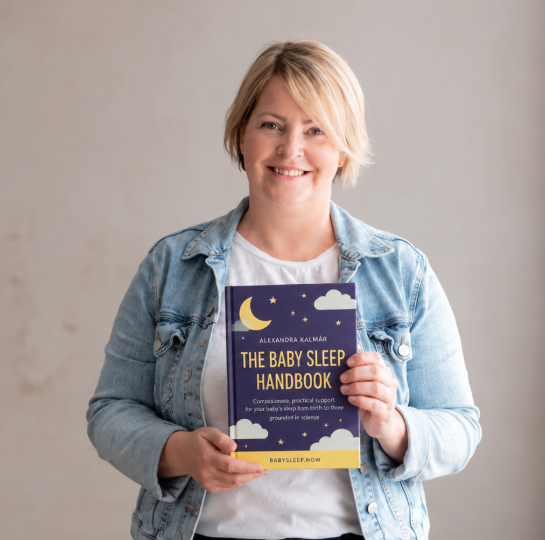
The Baby Sleep Handbook brings together current sleep research, nearly two decades of working with families, and practical guidance for understanding sleep from birth to three years.
It explores why babies wake, how sleep develops, what influences naps and bedtime, and how you can make changes without cry-it-out methods or rigid sleep training. Because understanding your baby’s sleep can make everyday life easier, not just during the clock change, but throughout the many changes that come with growing up.
The Baby Sleep Handbook – Real Science. Real Life. Zero Cry-It-Out.
Coming soon in English: