
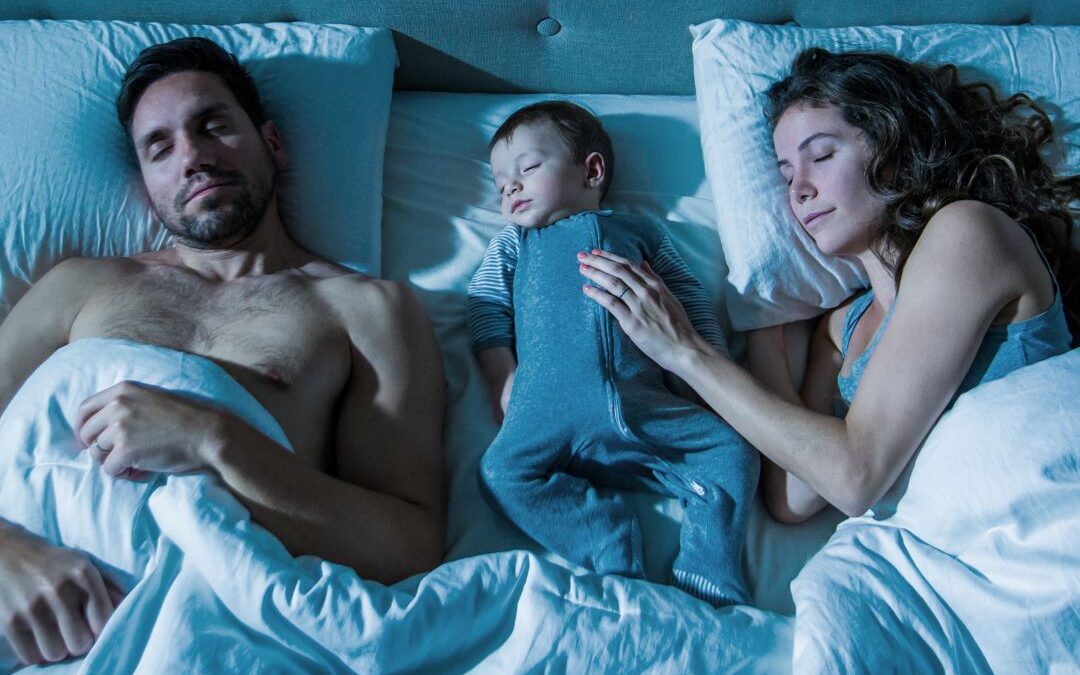
Does you baby sleep through the night?
Certificate of „good parenthood”: the baby who sleeps through the night
Anyone who has ever walked a dog in the city will have experienced that there are questions that need to be answered every ten minutes or so: „Wow! How big/small/sweet! What’s his name? How old? And what breed is it?” And when your first child is born, the equally obligatory question will be, „So, is she sleeping through the night yet?” The only difference is that there is only one expected answer to this question…
Let’s clear the air!
Relatives, neighbours and acquaintances do not like to face the fact that caring for a human baby is not a one-(wo)man job. It is difficult to take a hard look at our sub-optimal social functioning: it is difficult to say that motherhood for my daughter/sister/sister-in-law is difficult because I have abandoned her, and I have abandoned her because I am both a bit selfish and because I can barely manage my own life. Our automatic reaction is not this vulnerable self-acceptance, but the seemingly much safer position of omniscience, and the judgement that goes with it, attacking the tired mother. „It’s NOT normal that she still wakes at night, you must be doing something wrong or you wouldn’t be so upset!”
It’s good to know a few simple facts about how babies really sleep.
Waking up to have enough breastmilk
Exclusive breastfeeding could only work for a few months if babies slept through the night. But babies know what they are doing: they wake up eager, they want to nirse, so exclusive breastfeeding can work for around six months or so.
To produce enough milk, you simplyMUST breastfeed at night!
„But she’s big! He has to go through the night without eating!”
In a test we would say: A is true, B is false – but strangely enough there is a correlation! Because as the baby grows and gets curious, she doesn’t have time to nurse during the day, she’s busy. Every mother who breastfeeds a four-month-old baby, for example, knows this very well: if something happens around them, the baby is already thinking: „What am I missing while I’m wasting my precious time breastfeeding?”
Older babies get most of their daily milk intake at night (when everything is calm, they have time to nurse), preventing an irreparable drop in milk supply.
And if the baby doesn’t breastfeed?
Without milk, your baby can’t maintain a proper, stable level of blood sugar at night. In this respect, it doesn’t matter whether she is breastfeeding or not. It’s important that she gets a few feeds a night if she is not soothed by a pacifier or finger sucking.
But when will she really sleep through the night?
Some children do not sleep until around two or three years of age. (Perhaps consolation is that, in return, there is no child who, as a teenager, will not sleep through the morning if we let her…)
What is there to wait for?
→ The maturation of the sleep cycle: the sleep cycle of a newborn is forty-five to fifty minutes long, that of a two to three year old child is one to one and a half hours (an adult one and a half hours).
→ The maturation of the nervous system that allows the child to move from one sleep cycle to the next on its own, without assistance (breastfeeding, rocking, finger-sucking, pacifier, etc.).
→ And to reduce the proportion of REM phase in his sleep from 50% to 30%. This also happens around two or three years of age. REM is a very wakeful sleep phase, easy to wake up from. As long as half of the child’s total sleep is in REM, she’s bound to wake.
There are many different kinds of babies and many different parenting attitudes and responses. It is very easy to get babies to stop signalling when they wake up at night by leaving them alone. But in reality the more frequent night wakings tend to stop only around the age of two or three – and until then, tired parents should not be judged, but supported as much as possible!